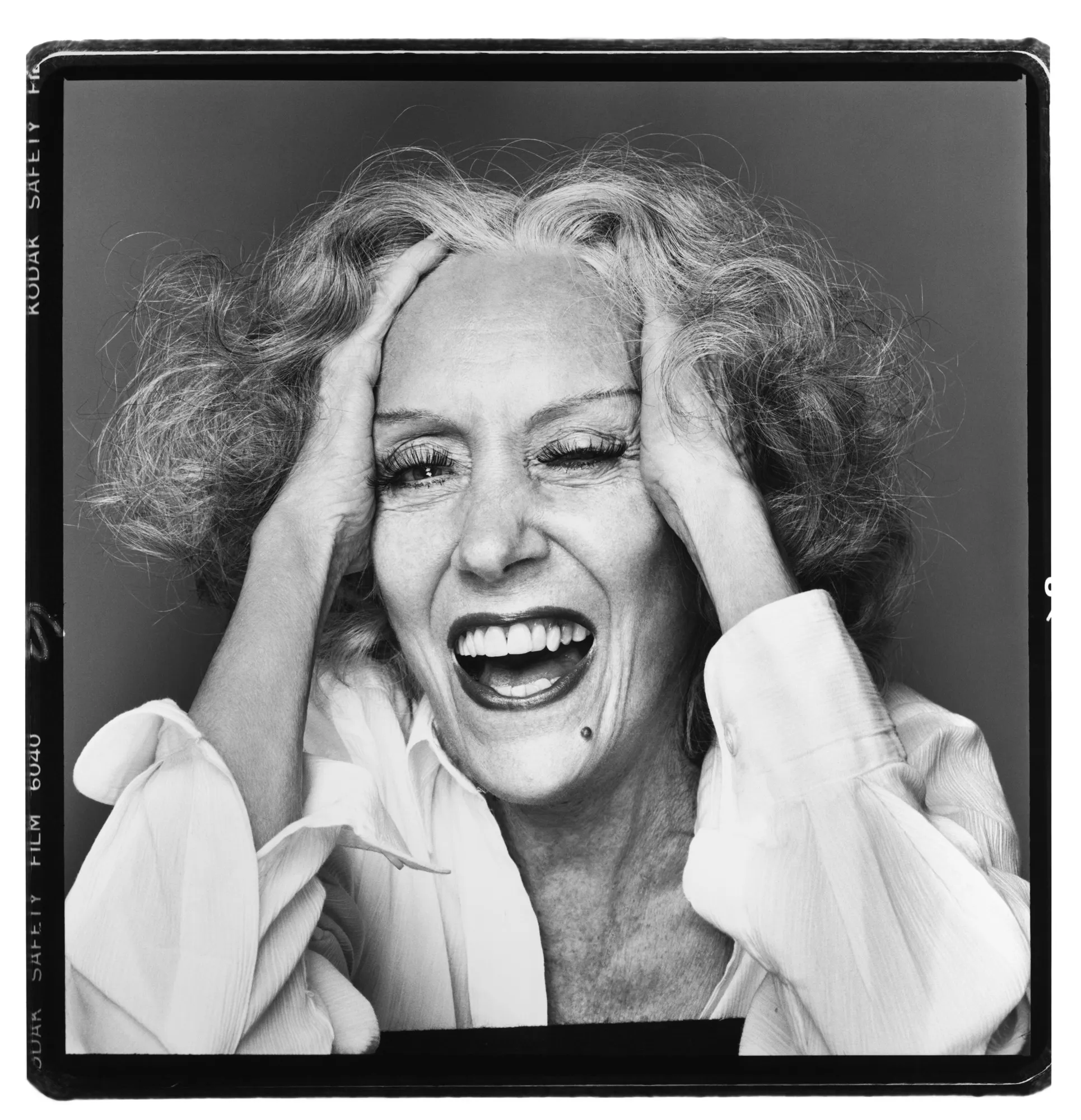
A Star Is Reborn: How ‘Sunset Boulevard’ Changed Gloria Swanson’s Legacy
She was ready for her closeup long before starring in the Billy Wilder classic, but the legendary actress struggled to make the jump from silent film to talkies.
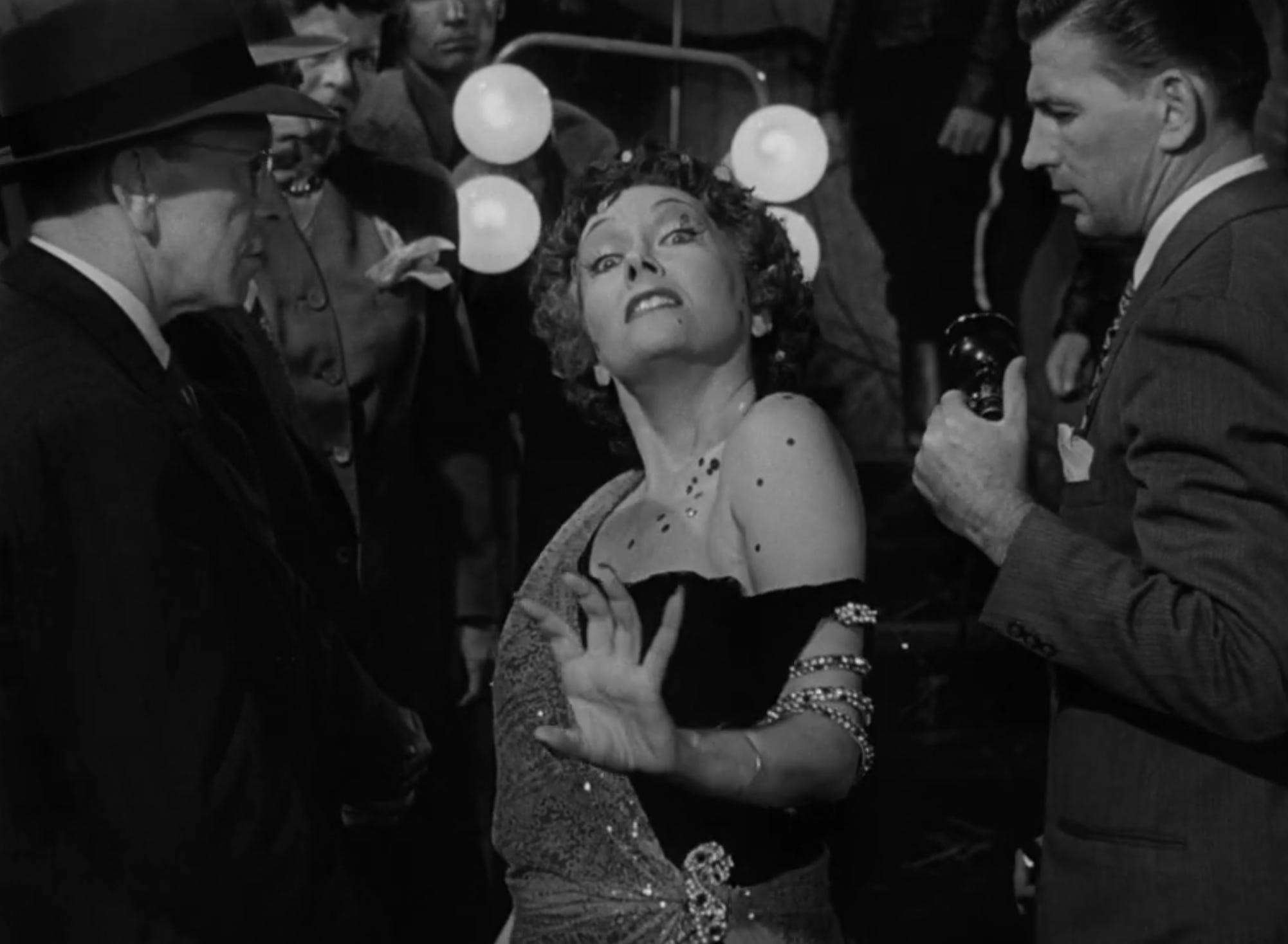
When Sunset Boulevard was released in 1950, it was a huge success. Variety reported that “Sunset Boulevard got the biggest non-holiday opening gross in the history of Radio City Music Hall.” The film stars Gloria Swanson as Norma Desmond, an aging and delusional silent film actress who believes that she is still popular and has a large, dedicated fan base. William Holden is Joe Gillis, a struggling screenwriter trying to make it in Hollywood and not doing too well at it. Like the fictional Norma, Swanson was one of the biggest stars of the silent era, so famous that newspapers would sometimes refer to her by simply her first name. No last name was necessary. While Swanson was always in the public eye in some way after her film career fell off in the 1930s, Sunset Boulevard remade her into a star and ensured her legacy as a classical Hollywood queen.
It could be said that the movies really began in 1894, when the first batch of paying customers lined up to see short films produced by Thomas Edison. According to Robert Sklar in Movie-Made America: A Cultural History of Movies, Edison initially thought that “moving pictures and his phonograph would provide home entertainment for families of wealth.” However, movies as we know them developed during years of critical change to the U.S. and its cities. By the 1910s, movies were a form of mass entertainment, alongside vaudeville, and became a working-class phenomenon. Urban workers, immigrants, and the poor watched Edison’s kinetoscope peep shows in storefront theaters. Movie studios were established, and some of these would later morph into the major studios of the classical Hollywood era. In about 20 years, movies went from short films, only a minute or even less, to a much longer, more sophisticated medium of storytelling with its own rules and devices.
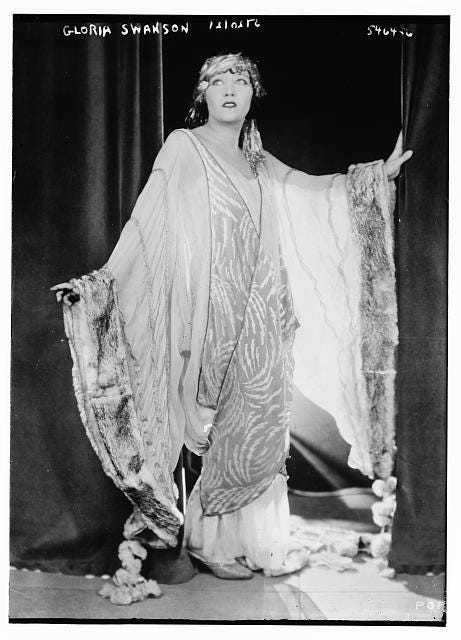
In the midst of the birth of this new medium, Gloria Swanson was born in 1899. Starting in 1913, she first worked as an extra in the Chicago-based Essanay Studios, where she appeared in some of Charlie Chaplin’s comedy shorts before he, too, was famous. She quit school to focus on acting full-time, and along with then-husband Wallace Beery, Swanson was signed to Mack Sennett’s Keystone Company. After doing a few comedies there, she decided to move to Paramount Pictures, only to return to Keystone, which by this time had become Triangle Film Corporation, and starred in some dramas. It was on her second return to Paramount that she got her big break. As she recalled on The Ed Sullivan Show in 1950, “I got into pictures when it was easy to get in pictures. In those days, they had to ask people off the street, strangers and some of their relatives to come in. There was no such thing as a casting bureau.” Swanson joined Cecil B. DeMille’s unit, starring in his sophisticated sex comedies, like Male and Female (1919), Don’t Change Your Husband (1919), Why Change Your Wife (1920), and The Affairs of Anatol (1921). These films made Swanson a true star, and she became one of the most in-demand actresses, as well as one of the most well-paid ($20,000 a week at the height of her fame).
Swanson became so famous that when she returned to the U.S. after filming Madame Sans-Gene (1924) in Paris, she was greeted with parades in New York City and Los Angeles welcoming her back. In this cultural moment, when it seems like any troll in a basement with access to the Internet and a podcast mic can achieve some level of fame complete with a loyal fan base, it might be hard for some people to understand just how famous she was. When she—as Norma Desmond in Sunset Boulevard—claims that without her there wouldn’t be any Paramount Pictures, Swanson wasn’t merely reciting a line. When she was at the height of her fame, Swanson was one of the biggest players for the studio. She and her contemporaries—Rudolph Valentino, Mary Pickford, Clara Bow, William Haines, John Gilbert, among others—were the first generation of movie stars and defined what it meant to be one for the rest of the century. Many of these silent stars didn’t transition into “talkies” after the advent of sound, usually because the studio blamed their voices, but Swanson’s problem was her age. She refused to play mother roles, so barring the box office flop of Father Takes a Wife in 1941, she didn’t act in a feature film from the years 1934 to 1950, when Billy Wilder’s Sunset Boulevard was released.
Wilder had approached Mae West, Clara Bow, Norma Shearer, and Greta Garbo for the role of Norma Desmond, but each turned it down for different reasons. According to Wilder, director George Cukor suggested Swanson for Norma, and they did resemble each other in some ways: Both were the biggest stars of the silent era, and both were known for their beauty, glamor, and extravagant lifestyles. When the studio called for a screen test, Swanson balked, declaring: “I made 20 films for Paramount! Why do they want me to audition?” But while Norma couldn’t accept that she was no longer famous and continued to live believing in the delusion that she still had a legion of loyal fans, Swanson moved to New York City and pursued different career paths, working in theatre, television, and radio until she starred in Sunset Boulevard.
The film’s success remade her into a star overnight. It was her return to the millions of people who never forgave her for leaving the screen. However, despite this resurgence of interest in her, Swanson only acted in three films afterward: her only color film, 3 for Bedroom C (1952), the historical epic Nero’s Mistress (1956), and her final film, Airport 1975 (1974). After Sunset Boulevard, she’d found herself getting more offers than she had since the silent era, but she turned down many of them for being pale imitations of Norma.
Sunset Boulevard solidified her place as one of the great classical Hollywood queens. If it hadn’t been for Norma Desmond, she might have only been known as another silent movie star who, despite being the biggest of them all, still couldn’t make the transition to sound. Following the film’s release, Swanson was eternally in the public eye. As film critic Molly Haskell theorizes in From Rape to Revenge, maybe silent film stars and directors could only be relevant in the last century if they had a notable “talkie” film. Some silent “It girls,” like Clara Bow and Mary Pickford, more or less disappeared from the public eye, unlike Swanson. Bow developed severe mental health issues, declaring that she preferred death to a public life. Pickford didn’t embrace the transition to sound, which turned out to be her undoing. Swanson, however, just didn’t want to be typecast as an old woman in her thirties.
Many actresses of the time claimed that they never worked back then, as Marlene Dietrich infamously maintained throughout her life, because admitting that their careers began in the silent era would age them. Swanson was one of the few who readily accepted the fact that she worked during the silent era, going so far as to talk candidly about her age and silent career to Ed Sullivan. She had a comfort in her own skin that many actresses unfortunately didn’t seem to have, and many still struggle with today. But perhaps Swanson felt she couldn’t deny being a silent film star, due to the many self-referential layers of Sunset Boulevard and being one of the most famous stars of the era. While Swanson embraced her past, she looked forward to the future and was excited about it. She eventually got tired of talking about the past, while working on her 1980 memoir, Swanson on Swanson. She lived in the present, excited for the future, and perhaps this is what kept her young. Swanson never moved back to Los Angeles, preferring New York City’s faster pace of life. She would jog two miles around Central Park during the day, and at night, she’d party at Studio 54 with the city’s glitterati.
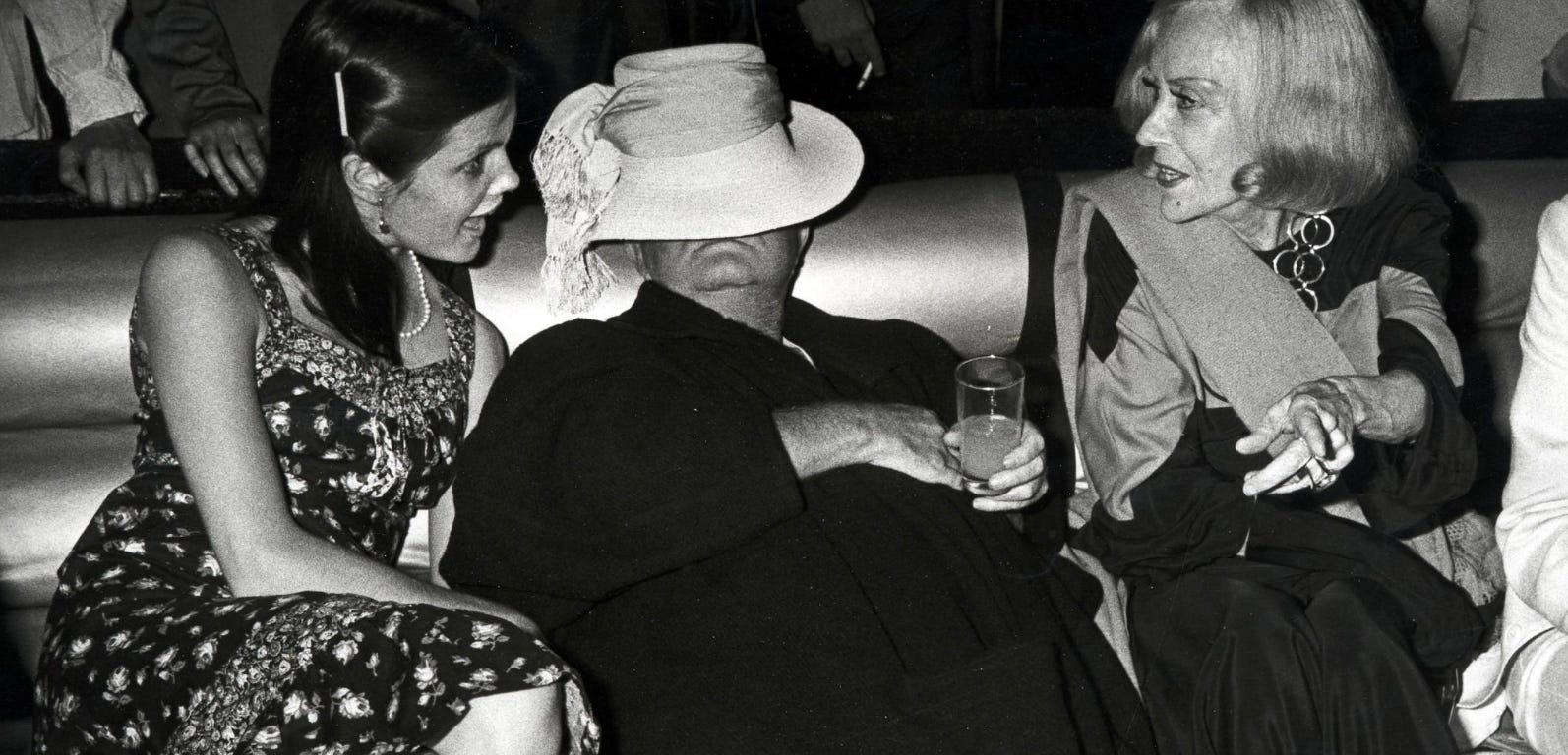
Gloria Swanson was not another tragic figure of Hollywood. Unlike many of her contemporaries, she didn’t die before her years, nor did she fade away from the public eye. Sunset Boulevard made her famous again, and she reveled in the attention she was given. Looking back on her career on The Ed Sullivan Show, she knew she was as much a product of the Golden Twenties as she was of the movie business. While she embraced her past, she didn’t dwell on it. She told The Wall Street Journal less than a month before she died that “The future is going to be wonderful.” She claimed that there was more to us than just our physical bodies, believing that there has to be another dimension to life. After a trip to Paris, Swanson suffered a mild heart attack and died only a week after her 84th birthday in New York City. She was in a league of her own until the end, just like Norma Desmond.