

Happenings: Mexico’s ‘We Shall Not Be Moved’ Has NYC Premiere
The 98th Oscars will be here before we know it. The Mexican film has gotten US distribution after it was selected to compete in the Academy Awards for Best International Film.
Mexico’s entry for this year’s Best International Feature Film, We Shall Not Be Moved, a black and white film set in Mexico City, is director and co-writer Pierre Saint-Martin’s first feature film and a strong contender. At a special screening last week in NYC, Saint-Martin appeared for a Q&A and shared some insight into the film’s production.

Cigarette ashes, endless stacks of documents, and frizzy white curly hair introduce us to a woman who has aged prematurely due to the harshness of life. Socorro, portrayed by Luisa Huertas, an attorney with a striking face of frustration and distrust, has a fierce will to pursue justice, rather than lawfulness. Her expertise in handling Mexico’s ugliest—corruption and delinquency—and her friendly yet insulting and sexually suggestive wordplay make for a character with enough depth and complexity to fill every scene of the movie.
Our protagonist is stuck in a 57-year-long nationwide trauma. In 1968, Mexico was under the fascist administration of President Gustavo Díaz Ordaz, who tried to take control of public universities’ curricula and approved Mexico to host the Olympics despite the country’s unfavorable economic conditions. Student protestors organized a strike and marched, but they were cornered by the military armed forces. Snipers, tanks, and battalions killed more than 1,345 unarmed people. “We shall not be moved” was the student’s chant before the massacre started.
A revelation related to the tragedy triggers Socorro’s search for revenge in 2024, when the rest of the country has long moved on.
Overall, the film showcases pure Mexican authenticity through the characters’ personalities and the situations they are tangled in. Each one has their own insurmountable problem, and yet, in darkness, the movie is full of nods to Mexicans’ humor for real-world absurdity. Mixing pain or suffering with comedy is a common element in Mexican culture.
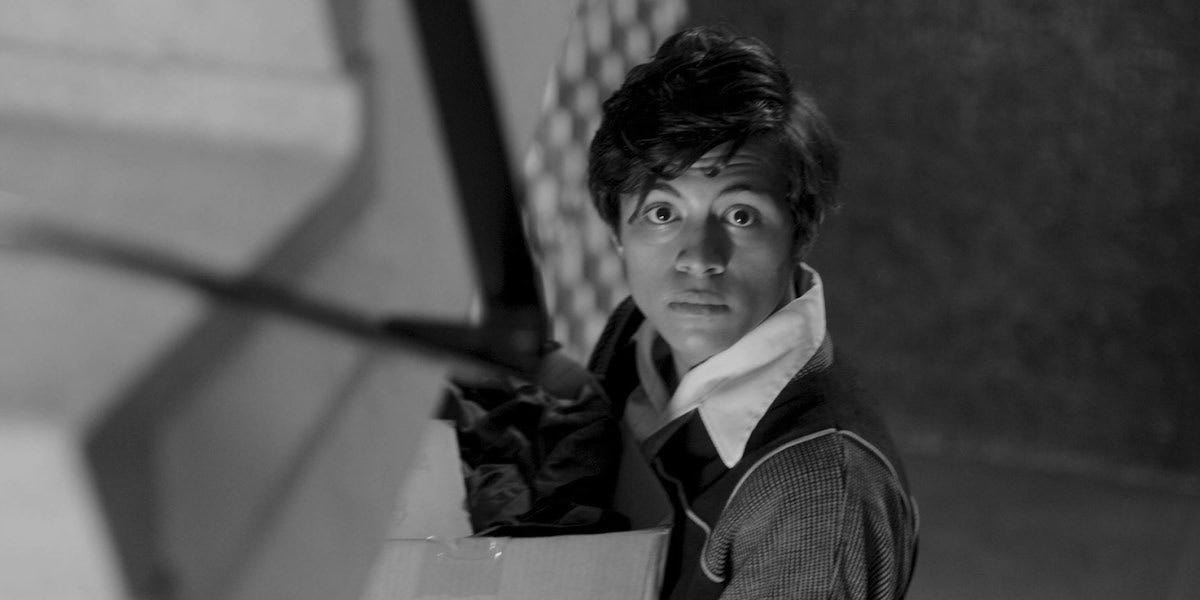
“If there is something that doesn’t help the story, I trim it,” said Saint-Martin on Thursday night’s Q&A at NYC’s Cinema Village. “I am not that person in real life; I’m an overthinker. But I have to be that when I’m making a movie.”
In his own words, the director’s experience working in television influenced his preference for tight shots, which he uses throughout the movie. This results in making the audience feel confronted by the unfavorable hand the characters are dealt, but it also creates a sense of intimacy. Both the fast pacing of the story and the tightness of the script show a clear cinematic vision.
“I don’t think about the audience until I’m editing,” said Saint-Martin. “When I do, it’s only to make sure the story can be understood. When I think about the aesthetic of the film, no. I just think of what is important for me, for what I want the movie to be.”
“In the film industry, having a tight budget is no excuse for making a bad movie.”
— Pierre Saint-Martin
While Latin American cinema is often overlooked, Mexico has had a presence at the Academy Awards with Oscar winners Guillermo del Toro and Alfonso Cuarón, but Saint-Martin is a new face at this level of the industry. Filling an apartment with pigeons, throwing a corpse down a shaft, and transforming a 74-year-old actress into an intimidating mob boss is a clear sign of audacity that might just earn him a golden statue.
“In the film industry, having a tight budget is no excuse for making a bad movie,” said the director. “One has to do the best we can with as much money as we have and resign to what is not possible to achieve. You’ll never hear, ‘I don’t know what to do with all this money.’ People always want you to do more in less time than you say you need and with less money than you tell them you need.”
 | A guest post by
|