

In Defense of Kay Corleone
Reviled by fans of ‘The Godfather’ films, the character immortalized by Diane Keaton is one of the most important in the mobster trilogy.
Diane Keaton is so well-known for her witty, self-depreciating, and down-to-earth sense of humor that sometimes her skills as a dramatic actress gets overlooked. Still, she left a lasting mark on cinema with her performance as Kay Adams-Corleone in the iconic Godfather films. Though Kay is defined by her relationship to Michael (Al Pacino), Keaton breathes life into Kay, from the introductory wedding scene in Part I to the explosive fight at the end of Part II.
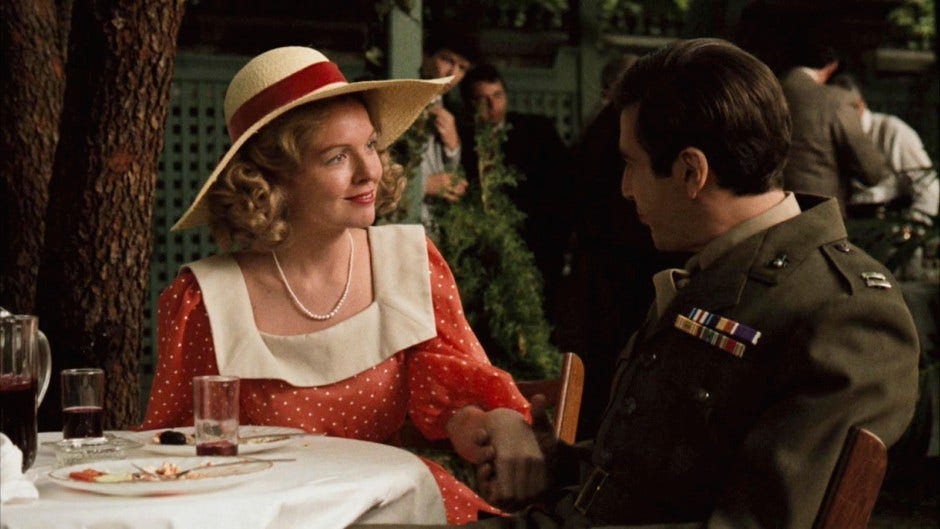
Despite her stardom, Keaton has always felt like an unpretentious everywoman, someone who’s easy to relate to on-screen. When the viewer is first introduced to Kay, she’s charming and outgoing. Both her demeanor and appearance are a contrast to the Corleone women: Her bright orange dress stands out against the pastel pinks and purples worn by the wedding party. Even Michael relaying a disturbing story about the family business isn’t enough to dampen her spirits, though it’s clear she initially assumes he’s kidding. In director Francis Ford Coppola’s own notes on Connie’s wedding, he emphasizes that Kay serves as the audience stand-in. Like her, we’re naive yet curious about the world we’re slowly being introduced to by Michael. Of course, Keaton’s natural chemistry with Pacino no doubt elevated their performances.
Keaton plays Kay as the charming lovestruck girlfriend at the beginning of Part I, eagerly buying Christmas gifts for Michael’s family and making quips about their viewing of The Bells of St. Mary’s (1945). By the time Michael returns from his exile in Sicily and proposes to Kay, their reunion after years of silence is hardly romantic. The frustration and desperation Kay feels only intensifies throughout her marriage to Michael. Keaton is an integral part of the first film’s iconic closing scene where Kay looks into Michael’s office with a striking expression of heartbreak and confusion before the door is closed on her. This scene is one that’s been examined, referenced, and parodied countless times since audiences first witnessed it, and it owes much of its poignancy to Keaton.
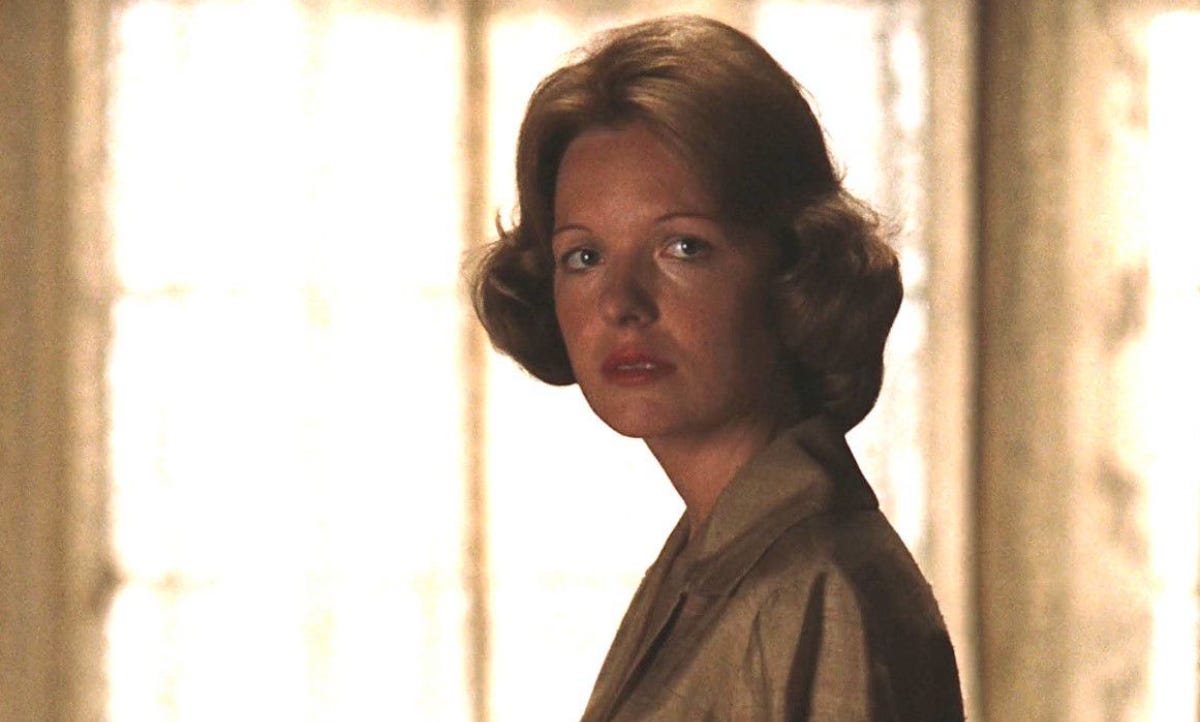
Reprising her role as Kay for Part II, several years have passed since the end of the first film. Kay and Michael hardly live in marital bliss, though she is pregnant with their third baby. The strain only deepens when machine guns rain bullets into their family home in an attempt on Michael’s life. While comforting their kids, Kay delivers Michael a death glare that undoubtedly signals the beginning of the end. Keaton silently communicates Kay’s justified rage toward her husband, his lies, and the effect his lifestyle has had on their children. Her anger seeps through the screen, signaling she’s about to reach her breaking point—one that still shocks audiences to this day.
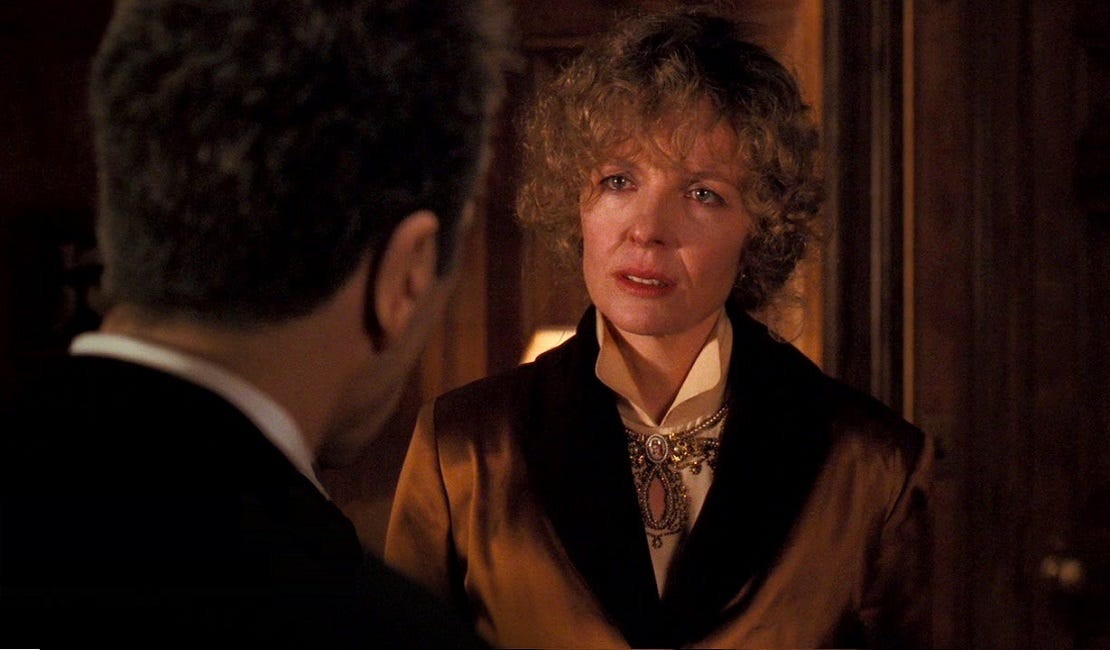
While Kay doesn’t have many scenes in Part II, she’s responsible for one of the most haunting aspects of Michael’s arc. Keaton’s gut-wrenching delivery when Kay reveals to Michael that she had an abortion reflects her dramatic abilities, as this scene is one of the most memorable (and controversial) of the trilogy. A woman with close to no autonomy, Kay deliberately having an illegal abortion is no doubt a desperate act, yet a powerful one as she tearfully confesses, “It was an abortion. An abortion, Michael. Just like our marriage is an abortion. Something that’s unholy and evil.”
Abortion has always been a hot topic, but with Part II’s release in 1974—a year after the Supreme Court ruled on Roe v. Wade—it was undoubtedly fresh in the public consciousness when theatergoers watched the film. Keaton’s performance in this scene is nothing short of earth-shattering, as the gravity of Kay’s decision and rawness of her anger take Michael by surprise. Pacino’s portrayal of the typically calm and collected Don—the title he inherited after his father Vito’s death—losing his temper complements Keaton in one of the most breathtakingly tense confrontations on-screen. Keaton cements Kay as more than just a desperate girlfriend or a submissive housewife, but a woman with startlingly real thoughts, feelings, and ambitions.
In 2023, Francis Ford Coppola held an ask-me-anything session on Instagram. One of the questions that came in was from Keaton herself, asking the director why he chose her to be in The Godfather. His response says it all: “I chose you, because although you were to play the more straight/vanilla wife, there was something more about you, deeper, funnier, and very interesting. (I was right).”
 | A guest post by
|