

Review: What Is It About ‘Tron’?
After years of wondering if ‘Tron: Ares’ would ever be made, the latest installment is finally here. Never a moneymaker, the film inspired a cult following, but what keeps Disney green-lighting more?
When Tron was released in 1982, it didn’t seem like it would amount to much. Reception was mixed; both critics and audiences didn’t know what to make of it. Disney had been struggling for years, and this was a desperate attempt to latch onto something that might make money, appealing to gamers during the peak of the arcade craze. Being such a unique film, Tron also offered a dazzling visual spectacle for people looking for something different than a mid-budget production. The movie was a financial flop, but its video game companion was a bigger success. No one suspected it would have a sequel 32 years later, or that it wouldn’t be the last. Its second sequel, Tron: Ares, had sat in development hell since 2010, and 15 years later, it’s finally in theaters. Now that Tron: Ares is here, was it worth the wait? And what is it about Tron, anyway? The Tron films have never been profitable because audiences find the plots hard to follow, but there must be enough interest in the franchise to warrant a third installment, as well as an animated TV show that aired on Disney XD in the 2010s. Following tradition, much of Tron: Ares isn’t strong narratively, but it’s at its best during action sequences and showing off the Grid, meaning the cyber world.
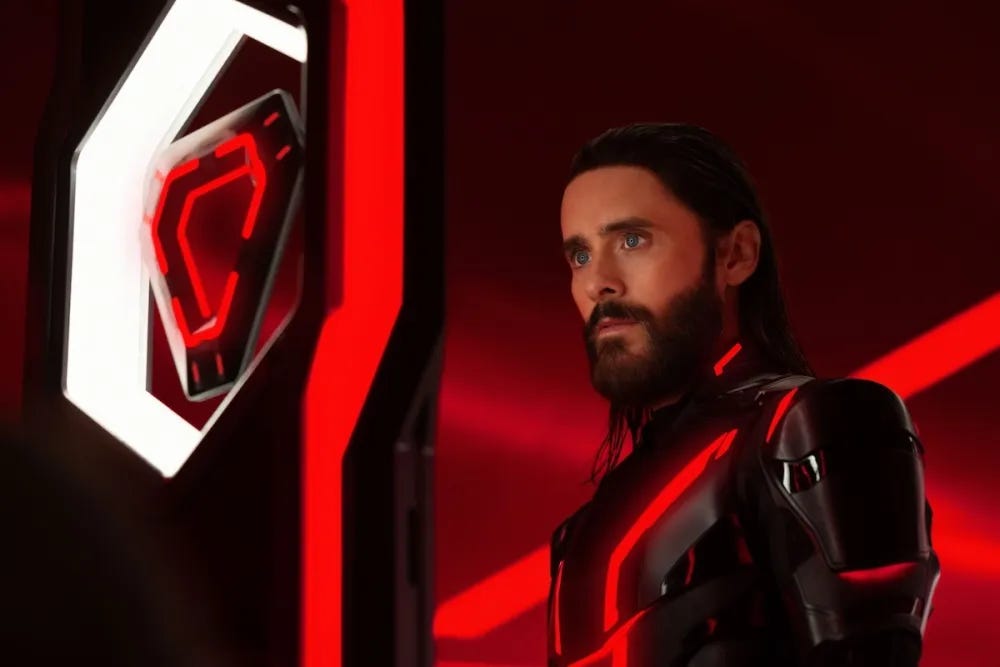
Jared Leto plays Ares, an experimental AI program whose programmer, Julian Dillinger (Evan Peters), a narcissist drunk on his own hubris and who brings to mind a millennial Big Balls. Dillinger is trying to bring Ares into the real world so he can be contracted out to militaries as a super soldier weapon. However, each time Ares is present in the real world, he can only survive for 28 minutes. After that, he “times out,” meaning his skin turns gray, his circuits fade, and he dissolves into a flash of light before disappearing completely. In other words, he dies, and Dillinger has to bring him back. Otherwise, he exists solely on the Grid.
The film questions how far mankind can take technology, and how dependent we will become on it. Will we ever evolve to a point where technology becomes a part of our DNA? Will we ever be able to go from the digital world to the physical, as if we were just traveling to a different country? As the controversy over AI grows, Tron: Ares meets this cultural moment with all the chaos that only the Greek god can bring.
This is a movie made for hardcore fans of the franchise without giving in to fan service too much. The latest Tron is still original and not a total throwback nostalgia vehicle, though it’s not without its Easter eggs. People who aren’t familiar with the franchise might not get it, but for those who do, Tron: Ares might be the perfect Tron film. Because the plot doesn’t make much sense and the dialogue often sounds like A.J. Soprano when he discovered existentialism, the film is most compelling during the action and fight sequences, especially when they’re happening on the Grid. The real world scenes are less engrossing, and you find yourself screaming in your head, “Can we please get back to the Grid!?”
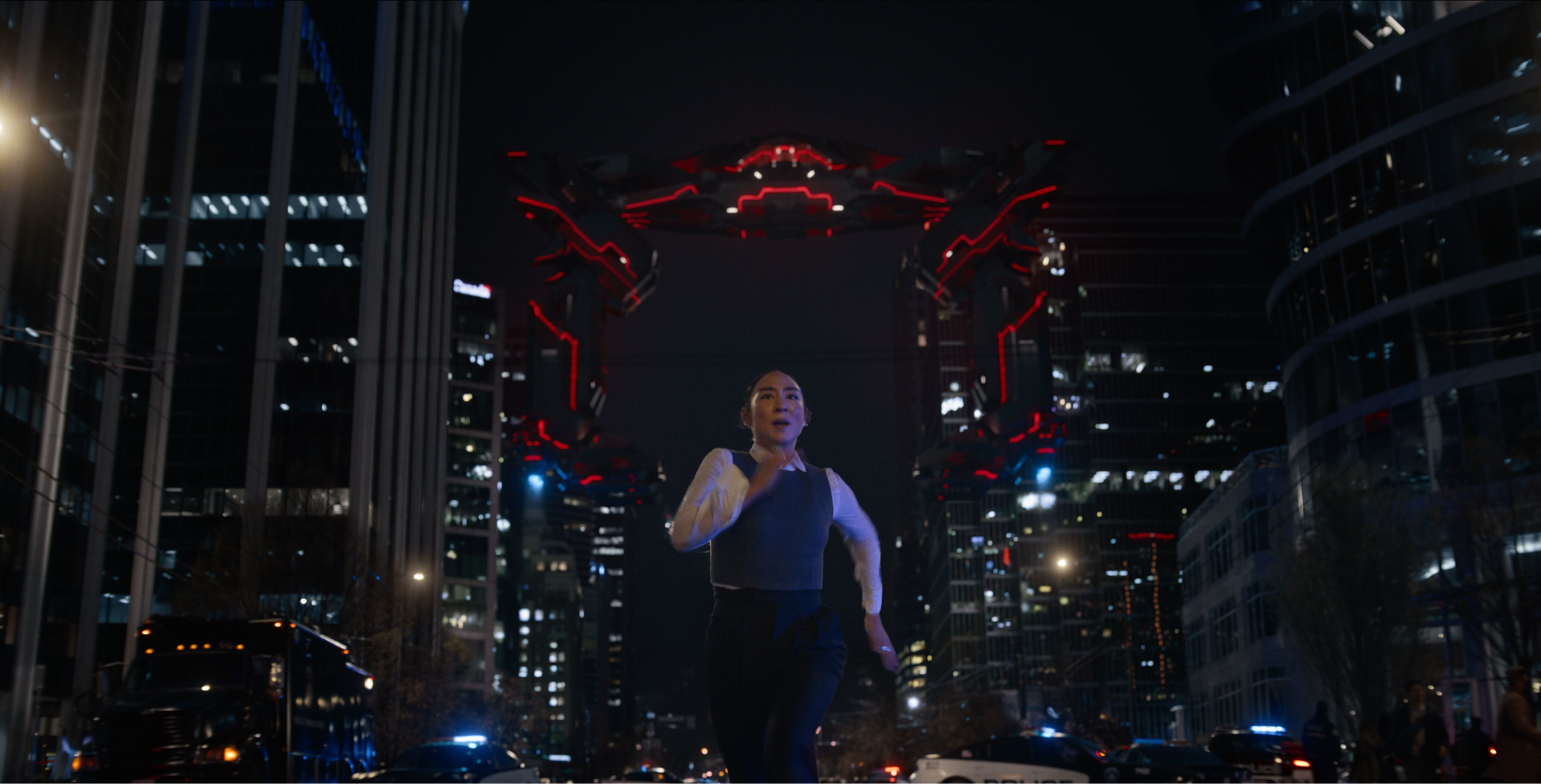
But even if the real world scenes leave much to be desired, director Joachim Rønning and screenwriters Jesse Wigutow and Jack Thorne find new ways to captivate and shock their audience. After Ares enters the physical world yet again, he and his second-in-command Athena (Jodie Turner-Smith) get into a high-speed car chase with police, who are no match against the super soldiers. Riding a lightbike (like a digital crotch rocket), Ares reveals he can deploy his jetwall in the real world, splitting a cop car in two. The destruction these advanced AI programs could create in the real world becomes immediately apparent.

The physical world moments suffer because the script introduces too many new characters, all of whom are totally unique because none of the original cast plays a major role in this film. Jeff Bridges returns as Kevin Flynn in the form of a ghostly wise old man who gives the young hero Ares sage advice, like Luke and Yoda on Dagobah except it’s Flynn and a young program on the Grid. Other than Bridges, no one else from the first film or 2010’s Legacy appears, and it’s hard to care about these new characters when much of the appeal of Tron is not character-driven. It’s all about the Grid sequences and its not-quite-cyberpunk, tech–inspired aesthetic.
So, what is it about Tron? The franchise doesn’t have mass appeal, but it has a small dedicated fan base who are probably already getting ready to push Disney for a fourth film. They might just get what they want, even if it takes another 15 years. Despite being a cult film, that doesn’t mean it hasn’t been influential. French house music duo Daft Punk, both of whom have a lifelong fascination with the franchise, composed the soundtrack for Legacy. And it goes without saying that Tron had a huge impact on animation because it’s often a testing (or dumping) ground to try out new technology. Director John Lasseter said that Tron paved the way for his film Toy Story. While the latest installment of the franchise isn’t without its problems, Tron: Ares is in sync with its cultural moment and rewards its hardcore fans, making it well worth the wait.