

Happenings: ‘Small Town Gay Bar’ Screens at Tribeca Festival 20 Years Later
Tribeca presented a retrospective screening of an overlooked documentary. At a Q&A afterward, director Malcolm Ingram reflected on his first film two decades later with drag performer Peaches Christ.
Monday night, director Malcolm Ingram’s heart-wrenching documentary Small Town Gay Bar (2006) played at Tribeca, taking the audience back to the early 2000s. As the title suggests, the film follows small town gay bars in a post-9/11 Deep South, where they were—and still are—vital places of community and fellowship for the tiny queer population. Twenty years later, not much has improved; if anything, it’s only gotten worse.
Ingram chronicles two bars in Mississippi: Rumors in Shannon and Crossroads/Different Seasons in Meridian. The owners know that by running a gay bar in these areas, it puts a target on their backs. They have to follow every rule in the book because if they don’t, they could be closed down, which happens to Crossroads over a minor incident. When the owner returned from prison, he found the property stripped of everything. A few years later, a lesbian couple decided to revive Crossroads, giving it a new life as Different Seasons. When the gay residents of Shannon learn that the owner of Rumors has plans to sell, they’re concerned: What if the bar closes down? It would mean people might have to drive two hours to Memphis just to find freedom and be themselves.
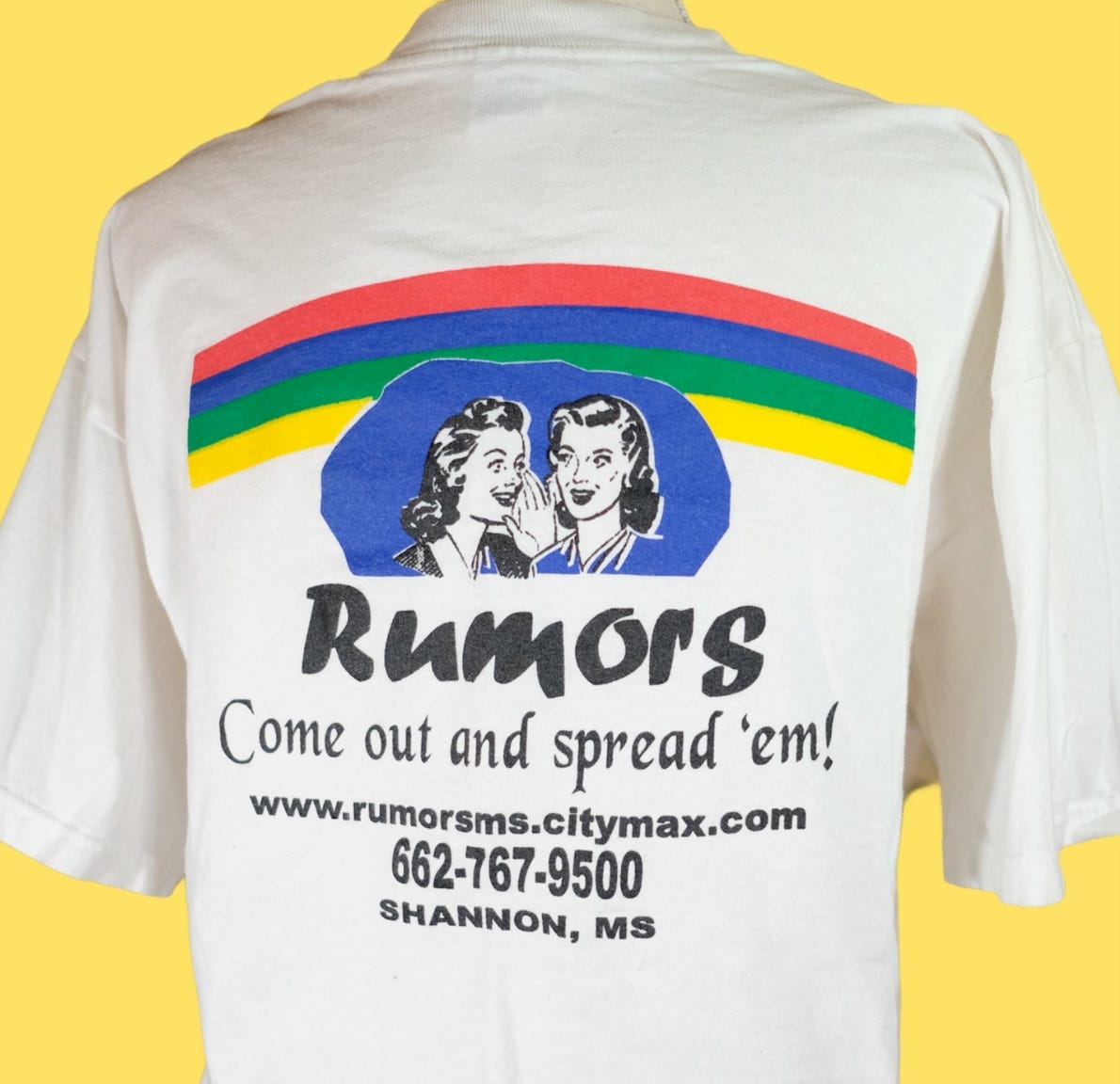
These bars are crucial spaces where members of the tight-knit queer community could relax, find each other, dance, have sex, and find a life partner. In these spaces, all genders and races could be found: gay men, lesbians, trans people, drag queens, Black and white. In rural communities where the overall population is already small (often less than 2,000), and the gay community even smaller, people see the bigger picture, so they put their differences aside and are there for one another. The owners weren’t doing it for profit but to give back.
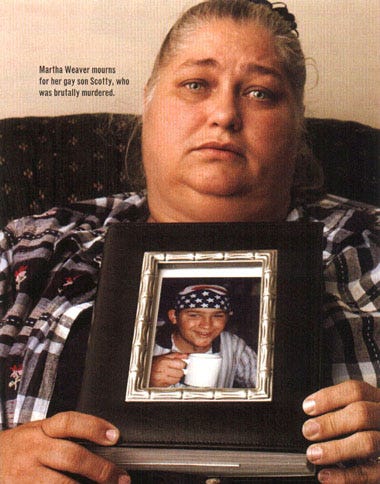
Six years after the killing of Matthew Shepard, Ingram visits Bay Minette, Alabama, to document a little known but equally disturbing hate crime: the murder of Scotty Joe Weaver. The gay 18-year-old was tied to a chair in his home and was then beaten, strangled, and stabbed numerous times by his roommates. His killers then dragged his body out into a field and set it on fire. Four days later, his partially decomposed remains were found by a man driving an all-terrain vehicle. Ingram interviews Weaver’s older brother, Lum, who is also gay. Despite Scotty’s slaughter, Lum talked about how he couldn’t hate the people who did this to his brother: To do so would fill the world with even more hate, and Scotty wouldn’t want that.
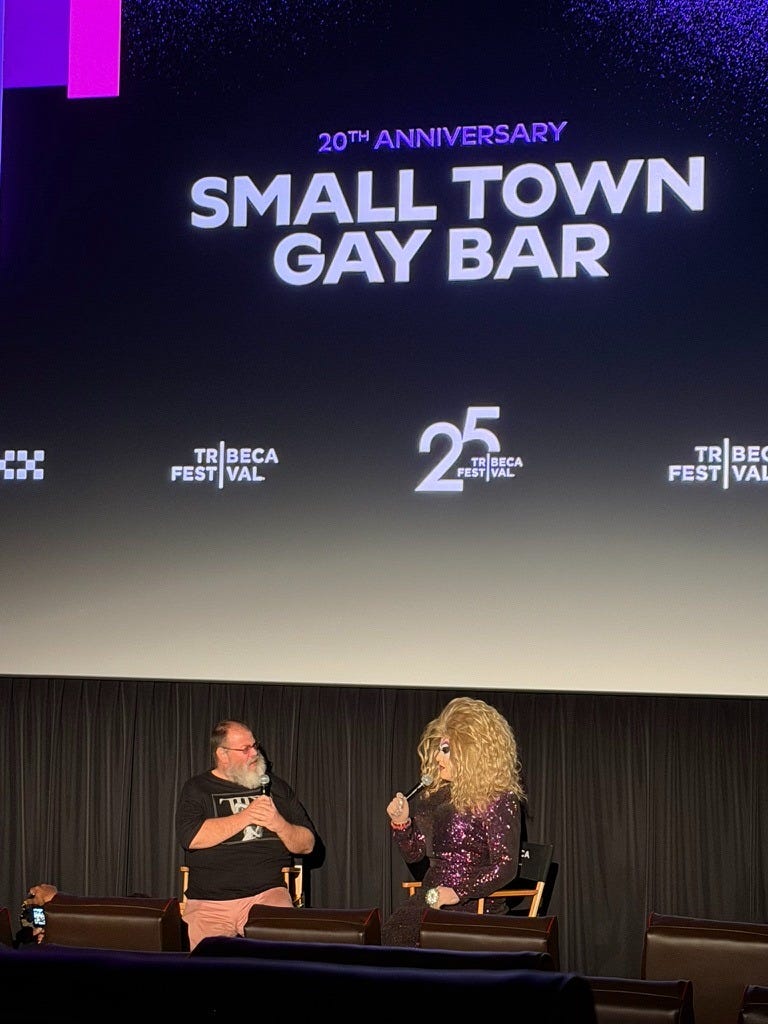
At the Q&A after the screening, drag performer and filmmaker Peaches Christ said that she respects the gay people of small towns who stay and don’t leave. “It’s like what Harvey Milk said: ‘To know you, it’s harder to hate you.’ And so with those folks staying in those communities, they’re really changing the minds of the people who live there.” Ingram recalled that gay men and women were more active in the early 2000s than the 20 years before or the 20 years since. “We just happened to catch this moment,” he said. “The movie is all about little miracles. When you make a movie, you want to weave it. You don’t want to stitch it.”
Peaches claimed that she couldn’t have become her drag-sona if she hadn’t started her career in San Francisco, and that if she’d lived in a town like Bay Minette, she might not even be alive today. She wondered to Ingram, Why don’t they leave and move to a bigger city? “I asked twice,” he said, “and the people got so offended when I asked it, I never asked again. Because the answer is, It’s our home. Why do we have to leave? We’re not leaving. They’re not going to make us leave.”
Ingram discussed the lack of support he’s faced from gays in the big city and declared, “It’s not a fucking community anymore. It’s just not.” Peaches agreed: “I think that is actually a really astute observation that those of us who live in these big places have a lot to enjoy, but there is a loss of togetherness sometimes that I yearn for. Back in the days of my early coming out and going to places where it was men, women, trans folks, nonbinary, Black, white, everyone, old, young, religious, not religious, punk.”
It’s our home. Why do we have to leave? We’re not leaving. They’re not going to make us leave.
Now, there are bars for every flavor of queer, and it actually alienates people instead of bringing them together. “Voices need to be heard, and I don’t want to take away from that, but instead of adding more letters to the acronym, maybe we need to start taking them away and kind of look at us all as a whole,” Ingram declared. “And obviously all voices need to be heard. I certainly don’t want to do an ‘All Lives Matter’ thing, but it’s just kind of, like, we need to get together because we have everything to lose if we don’t have each other’s backs.”
The director also gave an update of what’s happened to these small town gay bars in the 20 years since he documented them. Rumors is now a church (!), and Crossroads/Different Seasons doesn’t exist anymore. It closed down, and homophobes burnt it twice to ensure that queer joy could never happen on the property again. “You wouldn’t even know it was there,” Ingram said.
Monday night’s screening was dedicated to Ash Christian, who was like Ingram’s younger brother and helped him fund his films. He passed away of COVID.
Ingram plans to bring Small Town Gay Bar across the country to raise money for queer people in rural communities, so they can afford to be tested for HIV. In small, remote areas such as these, there’s a fee to be tested, closing access to many individuals.
Small Town Gay Bar offers a glimpse into what life is like as a gay or gender nonconforming person in rural, remote areas of the Deep South. Some progress has been made, but sadly, there is still a lot of work to be done.