

The Death of the Auteur Filmmaker
Last year, Paul Schrader's 'Oh, Canada' and Francis Ford Coppola's 'Megalopolis' grapple with similar themes in different ways.
Ever since the release of Martin Scorsese’s The Irishman in 2019, cinephiles can’t help but notice that directors in his age cohort are releasing films that grapple with mortality, either their own impending deaths or that of their loved ones. This year alone saw Paul Schrader’s Oh, Canada, Francis Ford Coppola’s Megalopolis, Robert Zemeckis’s Here, and David Cronenberg’s The Shrouds, each reflecting the directors’ unique sensibilities and concerns as well as this cultural moment. These films deal with memory and its fallibilities, the passage of time and anxiety surrounding that, and in one instance, the crumbling of empires, but the former two have key similarities and differences. In Megalopolis, Coppola is worried about the future, but in Oh, Canada, Schrader feels as if the past and his memories are all that he has now. Megalopolis is an over-the-top and at times overstimulating passion project, but Oh, Canada is a restrained drama.
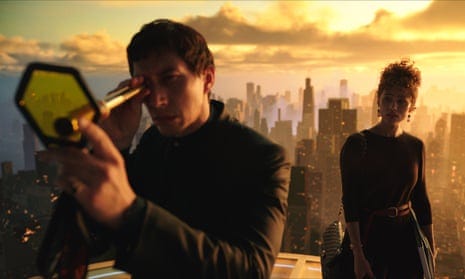
When the maximalist Megalopolis hit theaters and the film world in September, it received mixed responses, but it’s a miracle the film even exists. In 1977, Coppola became interested in making a movie that compares the fall of the Roman Republic to the future of the United States, but it spent decades in development hell until he used his own money to fund the project that would become Megalopolis. Cesar (Adam Driver) is a quixotic young politician who sees an idealistic utopia for the future, but Franklyn Cicero (Giancarlo Esposito) enjoys the status quo and profiting off the working class, paralleling the fall of the Roman Republic with the current moment in the United States. During a Q&A at the New York Film Festival, Coppola remarked that “Today, America is Rome, and they’re about to go through the same experience, for the same reasons that Rome lost its republic and ended up with an emperor … It was very prescient to do a movie about America as Rome because it’s going to happen in a few months,” predicting the outcome of the election three months before it occurred.
In Megalopolis, Coppola is clearly anxious about the passage of time and what lies ahead for future generations. At one point, Cesar even declares that “we’re in need of a great debate about the future.” At NYFF, Coppola explained that Rome was making a lot of money, so the senators became more interested in their own power and wealth, instead of running the country, which is what Cicero is mostly interested in. He doesn’t care about the working class, like many US politicians right now. With climate change accelerating and the state of US politics, the future feels very bleak, but in Megalopolis, Coppola is ultimately hopeful. In the end, the good Cesar and the evil Cicero put aside their differences to build a better future for everyone. Cesar wonders that “there’s still so much to accomplish, but is there time?” Is there still time to set up subsequent generations with a good future, or is time running out?
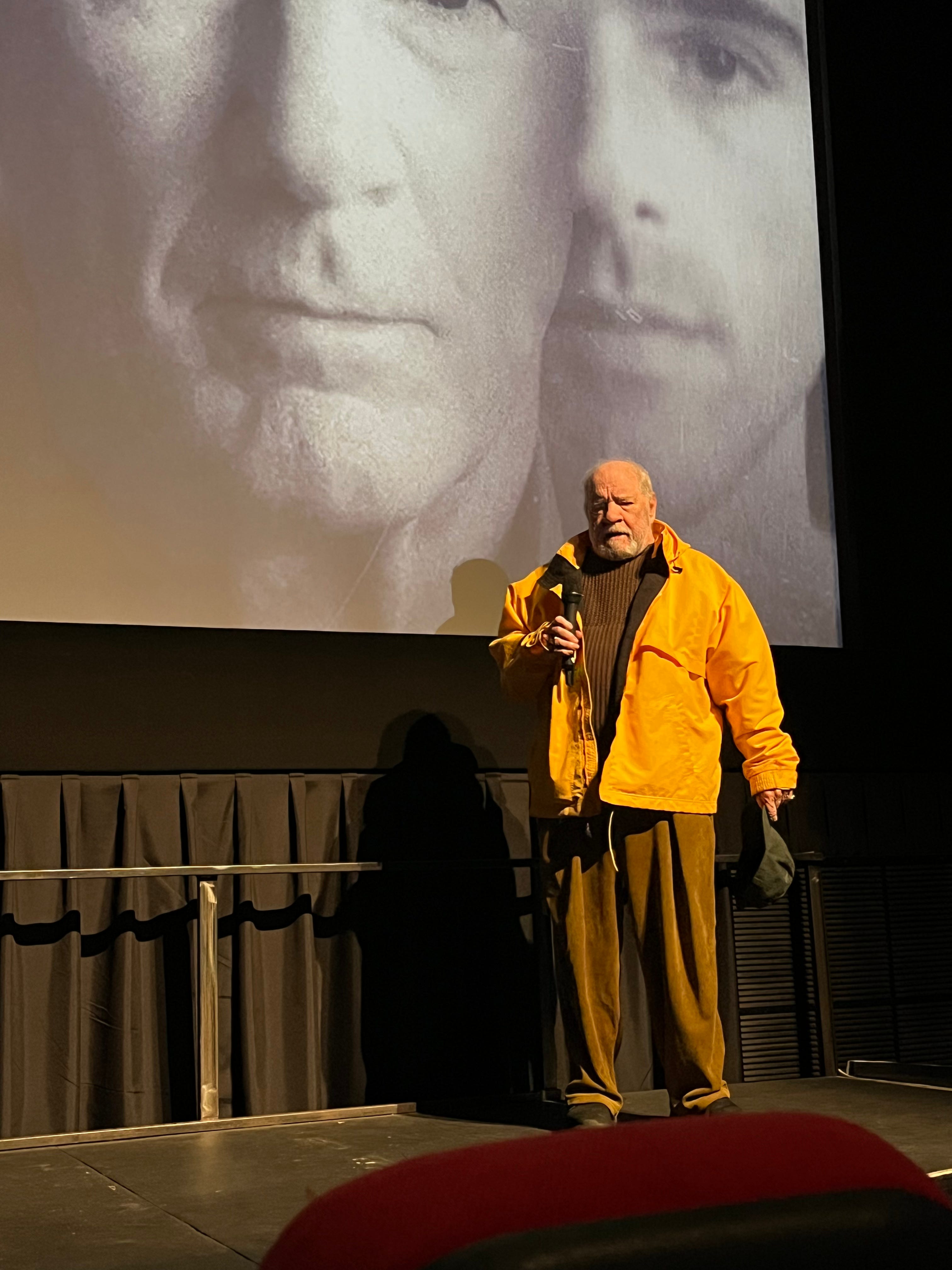
Where Coppola is concerned with the future in Megalopolis, Schrader confronts mortality, the past, and the fuzziness of memory in Oh, Canada. He takes a different approach by using the minimalist style that he has embraced since First Reformed (2017). Based on the novel Foregone by Russell Banks, Oh, Canada is the story of Leonard Fife (Richard Gere/Jacob Elordi), a famous documentary filmmaker now cancer-ridden and nearing the end. He looks back on his life and career through an interview with former student Malcom (Michael Imperioli), claiming he wants to do this for the record and the future. His wife Emma (Uma Thurman) sits in on the interview, choosing to believe that he’s not telling the truth in some moments. Fife fits in with the weird and off-putting characters that Schrader is known for such as Travis Bickle in Taxi Driver (1977) and William Tell in The Card Counter (2021), which he wrote, though Fife is not a violent man like Bickle and Tell. Oh, Canada is a weird, dreary film that feels aptly tired and sad, like the Schrader I saw who introduced the film at IFC one weekend, but maybe tired and sad is a good way to describe being almost 80 years old.
Fife looks back on an America that doesn’t exist anymore, a time when young men burned their draft cards or fled the country to Canada to avoid serving in the Vietnam War, when having a mustache and your hair brushed forward in a shaggy Beatle cut made you ineligible to run a business, when a lot of people got married and had children before 22 — all things that Fife did or considered doing. Fife declares that “when you don’t have a future, all you have left is your past.” He spends much of the film looking back on his past as that’s all he has now, but the memories are jumbled up, explained by his worsening health and the medication he’s taking. Still, as Schrader says in an interview with Film Comment from October 2024, “memories are projections, and they’re not perfect.” Fife’s retelling of his past is inconsistent because people’s memories become cloudy as we move away from the events. Considering that Schrader had a close brush with death when he became ill with a serious bout of long COVID, Oh, Canada becomes a deeply personal film. Gere as Fife, with his unkempt white hair and beard, sometimes resembles Schrader as he looks now, and it feels as if Gere is standing in for the director.
Schrader and Coppola have both watched loved ones pass away or become feeble. Schrader recently put actress and wife of 41 years, Mary Beth Hurt, in memory care due to the worsening of her Alzheimer’s disease. Author and decades-long friend to Schrader, Russell Banks passed away last year, and Schrader dedicated Oh, Canada to him. Coppola’s wife, Eleanor, also passed away earlier this year, and Megalopolis is dedicated to her. She was a constant presence on the sets of his films and kept journals documenting Apocalypse Now and her life as a mother raising children while supporting her husband.
We’re witnessing the death of the auteur filmmaker. Every other week or month, another member of the old guard passes away. In People Are Crazy Here, Rex Reed details witnessing the fall of classical Hollywood when MGM faced bankruptcy in the early 1970s. The film industry faces that same uncertainty again, and the deaths of all these greats mark the end of the auteur filmmaker in Hollywood. Coppola’s concerns about the future of the US and the rest of the world are the same anxieties surrounding the smaller scale of Hollywood’s future right now: did the old guard do enough to set up the next generation of filmmakers? Or is there time to fix it? Time will tell, but it’s not looking great with auteurs such as John Waters and David Lynch struggling to secure funding and influencers failing to fill the big shoes these icons leave behind. The auteur filmmaker in Hollywood is dying, and in the words of Reed in People Are Crazy Here, we are sadly listening to its death rattle.