

Why Britain’s 'Queer as Folk' Avoided the AIDS Crisis
When Russell T. Davies' trailblazing series aired in the late '90s, it was controversial for what it overlooked.
Russell T. Davies’s Queer as Folk was groundbreaking when it aired on Channel 4 in 1999. It depicts the lives of three gay men in Manchester, England, in an honest and realistic way with sex scenes that didn’t leave much to the imagination. The series follows Stuart Alan Jones (Aidan Gillen), the impulsive devil-may-care slut who does whatever he wants whenever he wants, who’s had everyone in Manchester. His best friend is Vince Tyler (Craig Kelly), who’s the exact opposite: He’s a nerd obsessed with Doctor Who and can never seem to get a date, or even get laid. He has an accepting mother, Hazel, who rents out a room to an older gay man. And lastly, Nathan Maloney (a young Charlie Hunnam) is the gay teenager who’s on the cusp of adulthood, eager to join the gay nightlife on Canal Street, Manchester’s gayborhood.
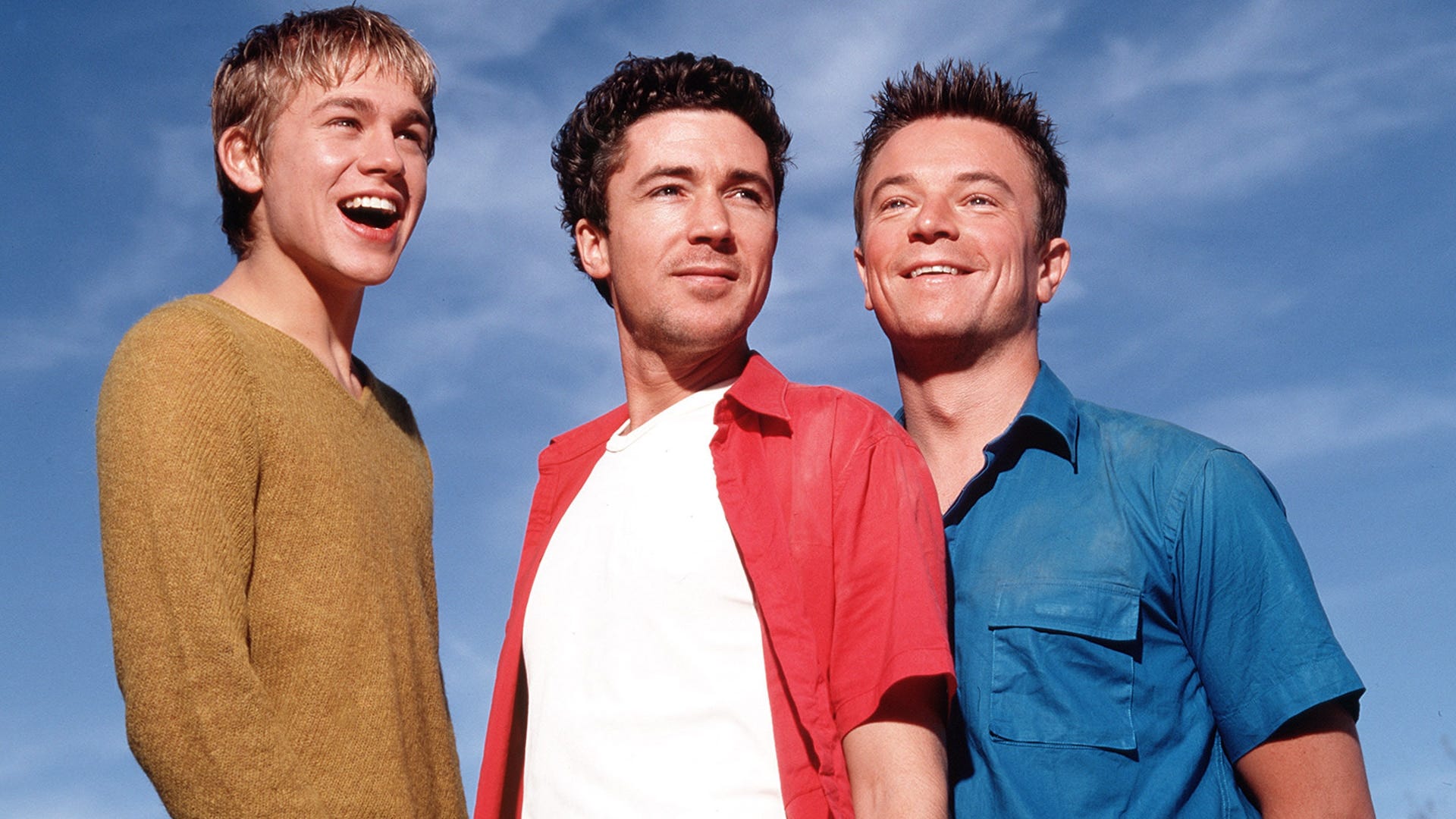
Unsurprisingly, Queer as Folk was met with controversy. Sponsor Beck’s Brewery pulled support after the first episode, in which 29-year-old Stuart shows 15-year-old Nathan what a rimjob is. Critics wondered how audiences would feel if Nathan were a 15-year-old girl. When Stuart and Nathan’s father have a row, it doesn’t make the latter look homophobic; it makes him look like a desperate parent upset that his son has become the (rather willing) victim of an older man. Ultimately, much of the controversy from the straight world was over how unflinchingly queer it is.
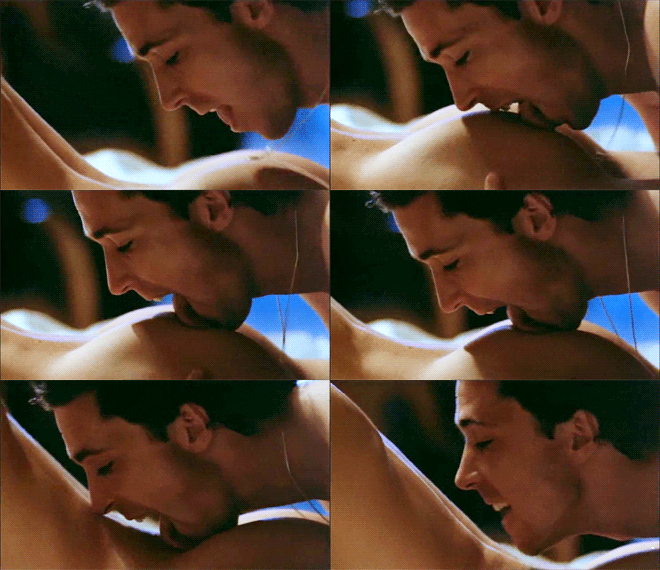
The U.K. gay press took issue with the fact that HIV/AIDS is never mentioned, but that was Russell T. Davies’ intention. In an article published by The Guardian in 2021, he wrote that “in 1999, I refused to let our lives be defined by the disease.” While the characters never mention it explicitly, they do allude to the AIDS crisis. A lesbian couple had picked Stuart to be their sperm donor. At one point they want to make sure that his insurance policy is in order, so that, should he get ill and pass away, they will receive financial help. One of them says, “We had you tested, but that was 10 months ago. Forty weeks ago, 281 one-night stands ago.” In other words, he could get AIDS and die. After a friend overdoses and dies, Stuart mentions to Vince at the funeral that only three of his sexual partners have passed away, which seems like good odds to him, all things considered.
But in general, the AIDS crisis is largely and fittingly absent from Channel 4’s Queer as Folk. This isn’t an AIDS drama, and it fits the post-HAART (highly active antiretroviral treatment) mood of the late ’90s. A new millennium was approaching, one in which there is treatment for HIV, where becoming HIV-positive isn’t a death sentence. It’s looking to the future, not the past.
That might reflect Davies’ mood in the late ’90s. He explains in The Guardian that during the height of the AIDS crisis, he mostly looked away, keeping his head down and staying busy while the epidemic unfolded around him. As he says in the article, he just did his job, “while the situation escalated, both in Parliament and on the streets. The government released its infamous AIDS advert, all tombstones and icebergs, with John Hurt gravely intoning the warning: ‘It is a deadly disease and there is no known cure.’ As a result, Margaret Thatcher made a whole generation of gay men scared of sex.” During the 1980s and ’90s, gay men bore the brunt of AIDS stigma, even though anyone can get it, regardless of sexuality, race, and/or gender. To Davies and many gay men in his age cohort, sex and death are intertwined. While Davies avoided confronting what was happening around him, he was perhaps eager to embrace the near future when HIV is manageable or even curable, and that is reflected in Queer as Folk.
However, despite the treatment, people were still becoming HIV-positive and dying because of the disease. Because of HAART, there were different strains of HIV that were resistant to treatment. So when the American version of the show premiered on Showtime in 2000, showrunners Ron Cowen and Daniel Lipman decided to do the opposite of Davies—depict HIV/AIDS as one factor of gay life in the early 2000s. Condom use is explicitly shown, some characters have HIV scares, some are HIV-positive, others date positive men (to the disbelief and chagrin of others), and some die of AIDS-related complications. The main characters are scandalized to discover that a finger-wagging, moralistic gay writer who claims that gay men shouldn’t be promiscuous participates in not just barebacking, but a barebacking orgy. The American Queer as Folk does all this without falling into the “AIDS drama” category.
That Channel 4’s Queer as Folk doesn’t mention AIDS seems like an oversight at first, but it’s fitting, especially considering that the series is a mere 10 episodes while the American version consisted of 83. Davies didn’t want to create an AIDS drama, and more importantly, he didn’t want gay men to be defined by the disease anymore, while the Showtime series incorporated HIV/AIDS as a normal aspect of gay life. Davies seemed to be eager for the moment we’re living in now, when HIV is no longer a death sentence, when it’s treatable and manageable, and a cure has never been more within reach.